
The comparison of Himalayan Pink Salt vs White Salt has become increasingly popular among health-conscious consumers looking for better choices in their daily diet. While both salts serve the same basic purpose of enhancing flavor, they differ in origin, processing methods, mineral content, and appearance.
Himalayan pink salt is harvested from ancient rock salt deposits and is often promoted as a more natural option, whereas white salt is typically refined and commonly fortified with iodine. Many people wonder whether these differences provide meaningful health benefits or simply affect taste and texture. Understanding the facts behind natural salt, trace minerals, refined salt, iodized salt, and healthy seasoning can help you make an informed decision.
What Is the Difference Between Himalayan Pink Salt and White Salt?
The main difference in Himalayan Pink Salt vs White Salt comes from nature and processing. Pink salt comes from old Rock salt deposits in the Himalayan mountain range, while white salt is heavily refined for modern kitchens.
People often ask Why is Himalayan salt pink. The answer lies in Iron content, which gives it a soft pink color. White salt looks pure because it goes through deep Salt processing, removing most minerals.
Key Insight Table
| Feature | Pink Salt | White Salt |
| Color | Light pink | Pure white |
| Processing | Less refined | Highly refined |
| Minerals | More Essential minerals | Mostly sodium only |
Both are still Salt varieties, but their Mineral composition is not the same.
Origin and Processing of Pink Salt vs White Salt
Pink salt comes from ancient Natural salt crystals formed millions of years ago. It is mined from deep underground in the Himalayas. This process is simple and keeps it close to Refined vs unrefined salt category.
White salt is processed in factories. It is cleaned, bleached, and often iodized. This removes most Mineral composition, leaving mainly Sodium content.
The difference in Salt mining and refining gives both salts their unique identity. Pink salt stays closer to nature, while white salt becomes more uniform for daily use.
Himalayan Pink Salt vs White Salt Nutrition Comparison
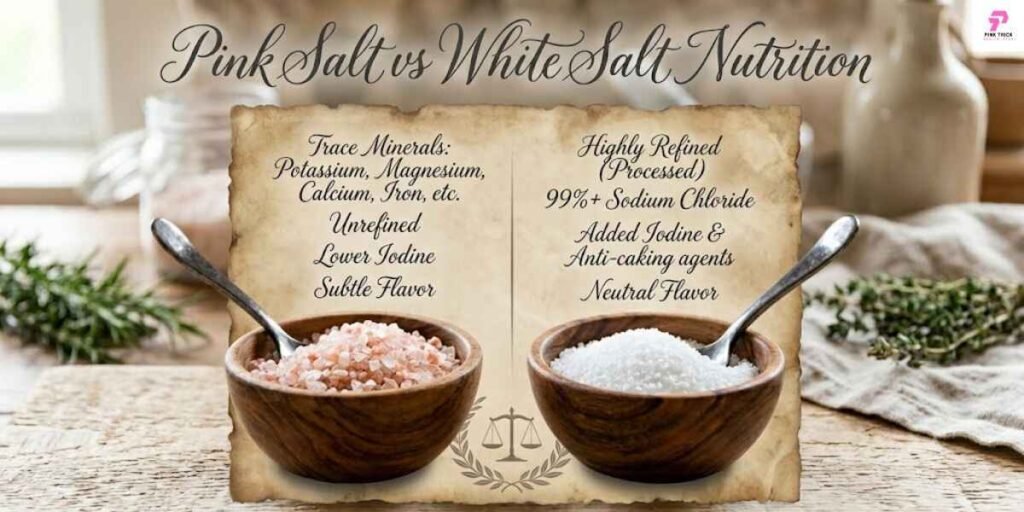
When comparing Himalayan Pink Salt vs White Salt, nutrition plays a big role. Pink salt contains small amounts of Trace minerals like magnesium and potassium. White salt mainly provides sodium and iodine.
However, both salts still have high Sodium content, which must be consumed in balance. Doctors always remind that too much salt can affect health.
| Nutrition Table | ||
| Nutrient | Pink Salt | White Salt |
| Sodium | High | High |
| Trace minerals | Present | Very low |
| Iodine | Low | High |
This makes Pink salt nutrition facts more diverse but not dramatically different in health impact.
Pink Salt vs White Salt: Key Differences at a Glance
The main differences in Himalayan Pink Salt vs White Salt are easy to notice when you look closely. Pink salt has a natural crystal look, while white salt is finely processed.
Taste is also slightly different. Pink salt feels more earthy, often used as Gourmet salt, while white salt is sharper and clean.
| Feature | Pink Salt | White Salt |
| Taste | Mild, earthy | Strong, sharp |
| Use | Finishing dishes | Daily cooking |
| Form | Coarse Crystal salt | Fine grains |
These differences make both useful in different Culinary uses.
Health Benefits of Himalayan Pink Salt
Many people love Pink salt health benefits because it feels more natural. It contains small amounts of Essential minerals, which support wellness routines.
It is also used in Himalayan salt for wellness, such as spa baths and detox drinks. Some even use Himalayan bath salt for relaxation after a long day.
Wellness Uses
Pink salt is also found in creative items like:
- Himalayan salt lamp for mood lighting
- Salt cooking plate for grilling
- Animal salt lick for livestock minerals
These uses show how versatile Natural pink salt can be in daily life.
Health Benefits of White Table Salt
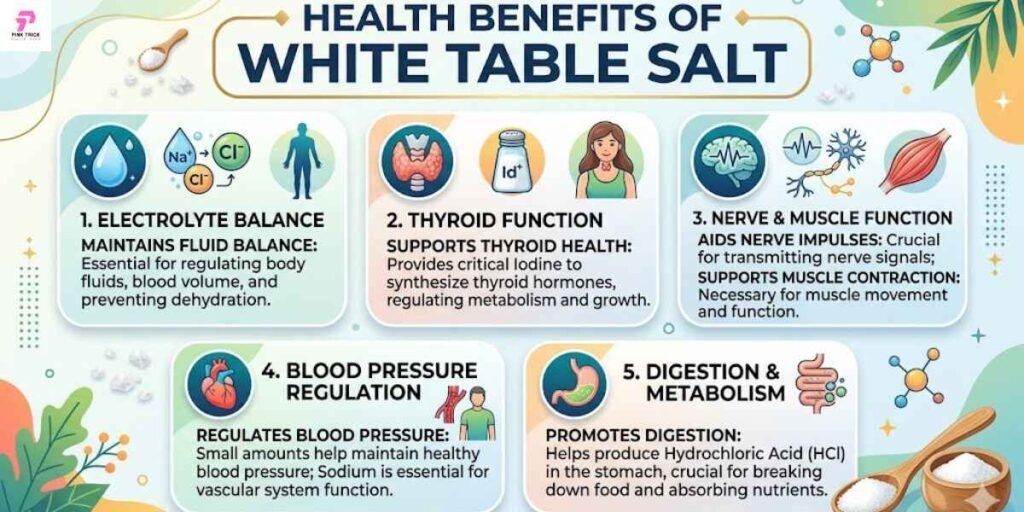
White salt remains important in modern diets. Its biggest benefit is iodine, which supports thyroid health. This is why many people rely on it for daily cooking.
It is also widely used in baking because it blends evenly. That makes it perfect as Salt for baking and Salt for seasoning in processed foods.
White salt is also reliable, cheap, and available everywhere. This makes it a stable choice for households across the USA.
Is Himalayan Pink Salt Really Healthier Than White Salt?
The truth about Himalayan Pink Salt vs White Salt is simple. Neither is a miracle food. Both are mainly sodium-based.
Experts say the Mineral composition in pink salt is too small to make major health changes. However, it is still valued as a Mineral-rich seasoning because it feels more natural.
Many health claims around pink salt are marketing-driven. But its natural look and texture make it popular for Food seasoning and lifestyle use.
Pink Salt vs White Salt for Different Uses
Different uses decide the winner in Himalayan Pink Salt vs White Salt. Pink salt works well in finishing dishes and gourmet meals. White salt is better for baking and mass cooking.
Pink salt is also used in spa products and wellness drinks. White salt is more common in packaged foods and home kitchens.
Both act as strong Natural seasoning options depending on need. For example, chefs use pink salt for presentation and white salt for consistency.
Potential Risks and Things to Consider
Even in Himalayan Pink Salt vs White Salt, overuse is the real problem. Too much salt increases blood pressure risk. This is linked to high Sodium content.
White salt lacks some minerals, while pink salt lacks iodine. So balance is important. Doctors recommend controlled intake for both.
The biggest risk is believing myths. Many people think pink salt is completely healthier, but science does not fully support that.
Which Salt Should You Choose?
Choosing between Himalayan Pink Salt vs White Salt depends on lifestyle. If you prefer natural appearance and Crystal salt, pink salt is attractive.
If you want iodine support and affordability, white salt is practical. Many households even use both together.
In short, both are useful Salt varieties, but your choice depends on health needs and cooking style.
Frequently Asked Questions
Which is better pink or white salt?
Neither is clearly better; pink salt has trace minerals while white salt provides iodine, so the best choice depends on your diet and health needs.
Can pink salt help with muscle cramps?
It may help slightly due to electrolytes, but evidence is limited and proper hydration is more important.
Is Himalayan salt ok for Hashimoto’s?
Yes, but it does not contain iodine, so people with Hashimoto’s should ensure iodine intake from other sources.
Which is the healthiest salt to use?
There is no single healthiest salt; iodized white salt is important for thyroid health, while pink salt is fine for general seasoning.
Can I drink Himalayan salt water every day?
Not recommended daily, as excess sodium can raise blood pressure; use it occasionally and in small amounts.
Conculsion
The final truth about Himalayan Pink Salt vs White Salt is balance. Neither is perfect, and neither is harmful in small amounts.
Pink salt wins in aesthetics and wellness appeal. White salt wins in nutrition support through iodine. The best choice is personal, not universal.
Both remain essential parts of modern Food seasoning habits and everyday cooking life.

Muhammad Usman is a passionate writer focused on creating simple, helpful, and engaging content. He shares practical tips on lifestyle, wellness, and daily routines, aiming to make information easy to understand and useful for readers worldwide.